Walk past any new build in London and you can almost tell the budget by the glazing. Not the size of the panes, but the integrity of the lines, the way the mullions carry light across floors without visual stutter, how the corner details either disappear or shout for attention. When aluminium windows and a curtain wall system work as one, the building looks composed and the interior feels settled. When they fight, even the priciest finishes can’t hide the mismatch.
If you’re searching “aluminium windows near me” and weighing up a curtain wall, you are already on a path that rewards careful pairing. This isn’t just a question of U‑values and RAL colours. It’s about system compatibility, sightline discipline, drainage logic, thermal continuity, and the installer’s hand. I have watched projects flourish because a designer insisted on matching suites from the same family, and I’ve seen schedules unravel when someone tried to bolt value-engineered windows into a high-performance façade. Here is how to keep the project calm and the results elegant, whether you’re specifying for a townhouse extension in Wandsworth, a mixed-use block near Old Street, or a commercial retrofit along the Thames.
What “matching” really means
Matching, in this context, is not just picking similar colours. It means the window system and the curtain walling share compatible profiles, gaskets, drainage strategies, and performance standards. You want consistent sightlines, aligned gasket reveals, and hardware that doesn’t look like a compromise. Ideally, the windows sit within the same system family as the curtain wall, or at least come from manufacturers that publish interface details for each other.
The reason this matters is twofold. First, the physics. A curtain wall is essentially a drained and ventilated rain screen with a structural frame. Insert windows into that wrong, and you risk water bypassing the pressure-equalised zone, which invites leaks you won’t find until the first heavy storm. Second, the aesthetics. An extra 8 millimetres on a perimeter frame can wreck the rhythm of mullion-to-window alignment and force ugly packers or over‑siliconed edges.
I’ve stood on scaffolding during site tests with a hose and a manometer. When the window and curtain wall suite are designed to marry, the spray test becomes a routine check. When they are not, everyone crosses their fingers.
The anatomy of a good pairing
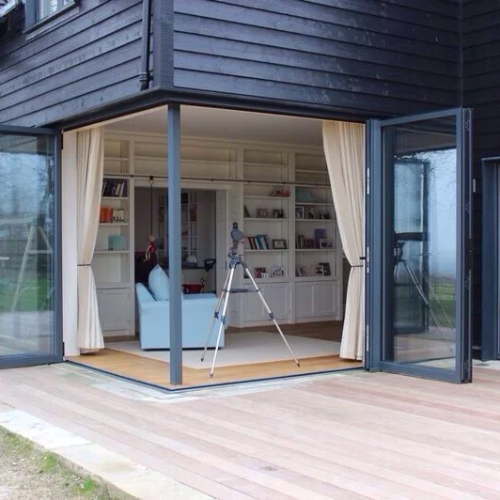
Start with the frame. Most quality aluminium systems for curtain walls in the UK come in stick-built or unitised formats. Stick-built, the more common for small to mid-size projects in London, is installed on site as mullions and transoms, then glazed. Windows can be inserted as structurally bonded units or as mechanically fixed, opening lights. Either way, the frame depth and rebate need to play nicely with the curtain wall pocket.
Look for shared thermal breaks. If the window’s polyamide barrier aligns with the curtain wall’s break, you get a continuous thermal line, not a little radiator at the junction. That affects condensation risk. I’ve walked into new flats on crisp January mornings and seen bead-like condensation around poorly matched inserts. The culprit was a break mismatch and insufficient perimeter insulation.
Hardware integration is another Aluminium windows near me Durajoin Aluminium Windows and Doors tell. If your tilt‑turn or parallel opening sash requires a bulkier hinge that pushes the sash proud of the curtain wall sightline, you end up with a lumpy façade. Many designers in London favour top-hung or parallel vent sashes in curtain walls because they preserve the external flush look and shed water more reliably. They also limit the risk of conflicts with internal blinds or furniture, which matters in tight apartments.
Performance targets that hold up in London
London’s climate is gentle compared to a coastal gale in the Highlands, but it still demands respect. Driving rain on south‑west faces exposes sloppy joints. Urban noise can be relentless. Building regulations have tightened energy targets. Pair windows and curtain walls with these metrics in mind:
- Air permeability: Aim for Class 4 to EN 12207 for operable windows, and equivalent performance at the curtain wall interface. Anything less shows up as whistling on windy nights and heat loss you feel in your pocket. Water tightness: Class E750 (or higher) is a sensible benchmark for most mid-rise projects. If you’re exposed by height or orientation, step up. Wind load: Serviceability and safety factors should be verified by calculation, not sales chat. In exposed sites or tall façades, don’t assume the catalogue default.
Two acoustic notes from jobs along the Overground lines: first, a double-glazed unit with a 6.8 mm acoustic laminate and a 4 mm pane, separated by 14 to 18 mm argon, can cut noise significantly without the cost of triple. Second, if you mix glass specs between the window and adjacent curtain wall vision panels, try to keep external reflections consistent to avoid the patchwork look at dusk.
Sightlines and the quiet magic of millimetres
Curtain walls live or die by sightlines. If your mullions are 50 mm, pushing a 70 mm window frame into the grid makes the window look heavy. Many system houses publish “hidden vent” or “structurally clamped” options that keep the visible metal down. Use them if your design calls for lean lines. If you need chunkier frames for structural reasons, design the grid around that fact rather than fighting it later.
Corners are a giveaway. In a Chelsea mews house we refit, the owner wanted a glass-to-glass corner with a minimal corner mullion. The curtain wall allowed a reinforced glass corner with a slim steel knife plate. The operable window near the corner had to respect a minimum edge distance for the hinge screws, so we shifted the opening one module away. The façade kept its lightness, and the window still opened wide. That is the kind of small layout change that saves you from ugly thickening later.
Drainage and the art of keeping water where it belongs
Water management is not glamorous, but it’s where many “aluminium windows near me” quotes cheat the numbers. Curtain walls drain at transoms through weep routes to the exterior pressure zone. Insert windows must tie into that logic. If the installer treats the window like a standalone rainscreen element, the internal baffle can end up dumping water into the warm zone.
Ask how the perimeter is sealed. Good teams step the DPC or EPDM membrane from the structure to the window and then to the curtain wall frame, with taped or bonded overlaps that respect the fall direction. Look for two-stage seals: a primary air and water seal at the outer face, and a secondary internal seal to catch any stray moisture. The neatest jobs I’ve seen in London have pre‑formed EPDM corners, not bits of flat tape forced into a radius.
Thermal breaks, condensation, and why trickle vents matter
Modern aluminium systems perform well when designed as a suite. Still, edges are where you lose the war. If you’re chasing low U‑values, check the psi values at the frame-to-glass edge, and do not overlook the frame-to-structure detail. I have seen triple glazing underperform because a metal bracket built a bridge through the insulation line. A simple thermal isolator plate cured it, but the plasterboard had to come off. Detail it early.
Ventilation is awkward in urban work. Background ventilators can mar the line of a tidy mullion. If you need trickle vents for compliance, pick integrated options that disguise the inlet in the transom shadow line or the head of an insert frame. There are product lines that achieve 5000 to 8000 mm² EA per window without becoming an eyesore. Pair the acoustic spec of the trickle vent with the glazing; otherwise, you create a weak point in a well-insulated wall.
When to choose a window wall over curtain wall
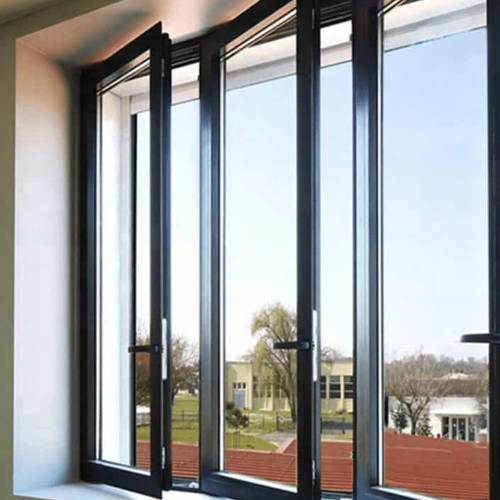
On many residential projects, a “window wall” built from robust window and door frames ganged together gives you the look of a curtain wall without the complexity. If the spans are modest, the loads manageable, and you don’t need the drained-and-ventilated façade logic, a well-executed window wall can deliver excellent value.
The catch is repetition. Window walls tend to show their module seams more. Curtain walls hide drainage and accommodate movement more gracefully in larger grids. In an eight-storey block in Stratford, we tried to cut costs with a window wall for two elevations. Mockup testing showed uncomfortable deflection at 3.6 m spans under wind load. We shifted those elevations back to curtain wall and kept the window wall for the sheltered courtyard. The mix worked because we designed each elevation to suit its exposure and structural demands, not a single standard across the whole scheme.
London realities: planning, heritage, and neighbours
If your project sits in a conservation area, the conversation starts with context. Slim aluminium profiles can win support if they echo traditional proportions. Black or very dark grey (think RAL 9005 or 7016) still dominates, but I’ve seen planners warm to warmer metallics when brickwork runs pale. On listed buildings, authentic putty lines and timber profiles may be non-negotiable at the street front, with aluminium allowed at the rear.
Noise is a practical driver. Flats along the A12 or near rail lines benefit from laminated glass and careful sealing, but do not forget purge ventilation. Acoustic attenuated trickle vents and, where budget allows, mechanical ventilation with heat recovery let you keep windows closed at peak noise times. Think about cleaning too. Parallel opening sashes in a curtain wall are excellent for purge air yet protect from rain. They complicate cleaning slightly, so specify access points or a cleaning contract that accounts for them.
Finding the right partner when you search “aluminium windows near me”
The phrase “Aluminium windows near me” typically pulls up a mix: national brands, local fabricators, and a few specialists who focus on bespoke work. In London, you’ll also see outfits who know the borough planning quirks and the logistics of access on tight streets. What separates the reliable from the risky is less about showroom polish and more about detail literature and mockup discipline.
Ask to see interface details between the window and curtain wall systems they propose. Many fabricators work within one or two system houses, which is good, because it means they’re fluent in those suites. A firm that can show you tested assemblies for insert windows in curtain walls makes life easier. If the conversation shifts to “we can make it work on site,” press for a rig test. A half-day spray test on a site-built mockup has saved more projects than any glossy brochure.
Durability and finish matter as well. Powder coating should meet BS EN 12206, with at least a 60 to 80 micron finish for coastal or polluted environments. London air, especially near main roads, is not kind to cheap coatings. Anodising holds up beautifully and gives that deep metallic glow, but keep colour variations in mind. If you mix window and curtain wall suppliers, match finish types, not just colour codes.
Durajoin and the value of aligned suites
Among the fabricators serving London, Durajoin Aluminium Windows and Doors has a reputation for disciplined execution. They work within known system houses and push for early detailing. On a block of flats near Hammersmith, they coordinated a hidden-vent window within a 50 mm curtain wall grid, keeping the external view almost uninterrupted. The trick was a narrow, thermally broken insert with a custom transom adaptor and pre-cut EPDM sock that slid into the mullion pocket. It read as one system, which is exactly the point.
When looking for Aluminium Windows in London or Aluminium Doors in London, teams like Durajoin that understand both windows and curtain walls under one roof save time. You avoid the blame game between separate suppliers if a joint leaks. They are also more likely to insist on off‑site assembly checks for unitised elements and to bring a water test rig for on‑site sign‑off. That testing culture, not a brand name, is what keeps interiors dry.
The economics: where to spend, where to save
Budgets push and pull decisions. A smart balance often looks like this: spend on the primary façade, save on the courtyard, and invest in fixtures you touch daily. Ultra-slim sightlines are expensive in operable windows, so keep most openings pragmatic and place the showpiece in the right location. A larger fixed curtain wall pane with strategically placed opening lights can give you the glassy look without multiplying costly hinges and drive gear.
Hardware quality is a quiet cost that pays back. Robust concealed hinges and multi-point locking keep sashes true over time. I’ve returned to jobs five years on where bargain hinges sagged 3 to 4 mm, just enough to catch the frame and irritate occupants. A hinge rated for sash weights above your specification gives you headroom, especially with heavier laminated glass.
Plan for cleaning and maintenance. A façade that needs abseil teams twice a year might be reasonable on a commercial tower, less so on a five-storey residential block with limited service budgets. Designing in opening lights that enable safe cleaning from inside can cut lifetime costs dramatically.
Real-world examples: what works and what bites back
A small art gallery near Clerkenwell commissioned a two-storey curtain wall to flood the space with daylight. Early sketches showed tilt‑turn inserts aligned with a 60 mm mullion grid. The mockup immediately revealed a problem: external sash edges broke the flush narrative. We swapped to parallel outward vents with chain drives hidden in the transom zone. From the street the façade read as pure glass, and the gallery kept secure ventilation on summer evenings.
On a Hackney warehouse conversion, the client wanted steel-look glazing but balked at the weight and cost of true steel. We used a thermally broken aluminium system with applied transoms and slimline glazing bars to echo the industrial grid. The curtain wall formed the main stairwell, with insert windows for purge at each landing. The key was restraint. Too many fake bars would have looked kitsch. We studied old photos of the original warehouse and matched the rhythm instead of inventing a new one. The result felt authentic enough to please conservation while delivering the performance of modern aluminium.
The bite-back story: a developer in South London mixed two brands to shave lead time, one for the curtain wall, another for the insert windows. Both were individually good products. Their combination, on paper, seemed fine. On site, the gaskets at the interface fought each other, causing a stubborn squeak in high winds and a persistent drip during soak tests. We ended up machining custom adaptor pieces and replacing gaskets at the worst locations. The time and cost erased any savings. Lesson learned: compatibility trumps schedule when you’re pairing systems.
Materials and finishes that age with grace
Aluminium is honest. It doesn’t pretend to be timber, and it doesn’t mind being seen. The finish you choose writes the building’s mood for decades. RAL 7016 became a default for good reasons, but it’s not the only path. Deeper charcoals give a crisp edge against pale stone. Warm bronzes sit well with London stock brick. Champagne anodising catches the low winter sun beautifully, though it demands a steady hand on procurement to avoid batch variation.
Inside, powder-coated frames can echo joinery colours or recede to let the outside take center stage. If you run a curtain wall past a mezzanine edge, consider a slight gloss bump on the interior face; it resists scuffs from bags and elbows. If the building faces a busy road, hydrophobic glass coatings reduce the hazing that builds up after a few months. They aren’t magic, but they stretch cleaning intervals enough that facilities managers notice.
The installation sequence that avoids headaches
A clean installation sequence saves money and tension. Structure first, checked and plumb. Curtain wall mullions set on proper brackets with allowance for slab movement. Transoms leveled without packer stacks. Air and water membranes dressed in before glazing. Only then do insert windows go in, tied to the same datum and sealed in layers, not blobs of mastic.
I like to schedule a pre‑glaze inspection with the installer and main contractor, clipboards in hand, to catch missing baffles or misaligned brackets. A 30‑minute walk can prevent a week of returns. Once glass goes in, remedial access becomes awkward. After glazing, a controlled water test on a representative bay proves the drainage works as a system, not as wishful thinking.
Sustainability without slogans
Aluminium has a high embodied energy at first melt, but the story changes when you choose recycled content. Many system houses in Europe offer billets with 50 to 75 percent recycled aluminium, often labelled as post-consumer. That choice cuts embodied carbon substantially while delivering the same performance. Ask for Environmental Product Declarations from the supplier. For glass, consider low‑iron only where you truly need clarity. Standard clear with modern low‑E coatings often suffices in residences and reduces cost.
Thermal improvement through design beats piling on spec. A carefully insulated head and cill detail, with thermal isolators at brackets, lifts performance in a way that occupants feel. Shading matters too. If you install large south-facing curtain walling without external shading, summer gains will overwhelm even a high‑performance unit. Small, retractable external shades or a thoughtful overhang can make the system liveable without turning rooms into greenhouses.
How to brief your supplier
Clarity at the start prevents friction later. Share your priorities. If you value near-invisible operable vents, say so, and accept the small compromises in maximum opening angle. If acoustic performance is paramount, align glazing specs across window and curtain wall to avoid uneven reflections. Provide structural movement data from your engineer. Curtain walls need to accommodate slab deflection, thermal expansion, and small building shifts. Windows within that frame must tolerate the same movements without binding.
In London, lead times can vary with demand. A realistic window is 8 to 14 weeks from final approved drawings to site delivery for bespoke work. Add time for powder coating or anodising, and do not forget the mockup cycle. A dedicated project manager at the fabricator helps keep these threads aligned. Names matter less than habits. If a team like Durajoin Aluminium Windows and Doors can show you recent jobs where they delivered, tested, and maintained a curtain wall with integrated windows, they’re worth shortlisting.
Bringing it together
The idea behind searching “aluminium windows near me” is convenience. The reality, for projects that involve curtain walling, is partnership. You want a supplier who can stand on the scaffold with you, point to a gasket and explain why it’s there, show you how water exits the system, and adjust a hinge so the sash closes like a car door. You want a designer who cares about the way a 50 mm sightline reads against a 225 mm brick module. You want a team that will test the assembly before handing you keys.
Aluminium gives you discipline and freedom at the same time. You can draw lines that are honest, slim, and strong, then open parts of the façade to air without breaking the story the building tells from the street. Pair your windows and curtain wall as parts of one system, lean on experience, and you will get a façade that stays quiet in the rain, feels warm in winter, breathes in summer, and looks like it was always meant to be there.
If you’re working in the capital, there are many credible options for Aluminium Windows in London and Aluminium Doors in London. Shortlist firms that publish interface details, insist on mockups, and have site teams who take pride in tidy membranes and straight mullions. Names like Durajoin Aluminium Windows and Doors come up for a reason: they align products and craft. That alignment is what turns a stack of profiles and panes into a unified façade.